A brief description of laser therapy
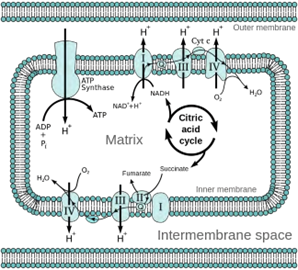
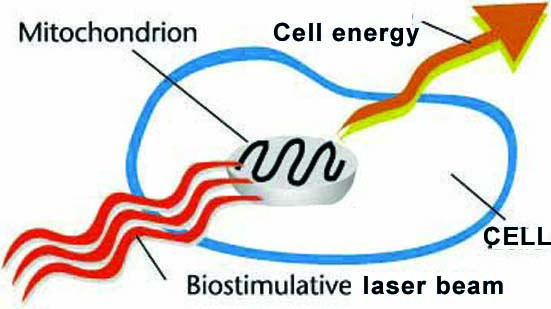
The theory of Laser therapy goes back to early physics. It is based on Albert Einstein’s work on stimulated emission laid the foundation for our modern understanding of laser radiation and its applications. A defining characteristic of laser light is its coherence, which distinguishes it from the incoherent photon emission of conventional light sources. This coherence corresponds to a highly ordered energy state that can be effectively utilized by mitochondria to support cellular energy production, specifically in the synthesis of adenosine triphosphate (ATP).
According to the first law of thermodynamics, energy cannot be created or destroyed, only transformed. In laser acupuncture, this principle is applied by transferring the energy of coherent laser light to cellular photoacceptors within the mitochondria. During this process, laser photons interact with biological tissue and transfer their energy, which is then used in the mitochondrial respiratory chain to enhance ATP production.
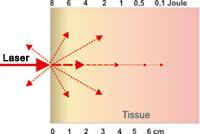
When laser light interacts with human skin, a portion is reflected at the surface, while the remainder penetrates into the tissue. Within the tissue, the light may either be absorbed or scattered. The angle of incidence plays a crucial role: the steeper the angle, the greater the proportion of reflected light. Therefore, to maximize tissue penetration—as required in laser acupuncture—the laser beam should be applied as perpendicular as possible to the skin surface.
Furthermore, an appropriate laser device can generate specific pulse frequencies that may induce resonance within the cellular system and potentially enhance healing-related signaling.
Respiratory chain
Mitochondrion
Laserbeam - skin
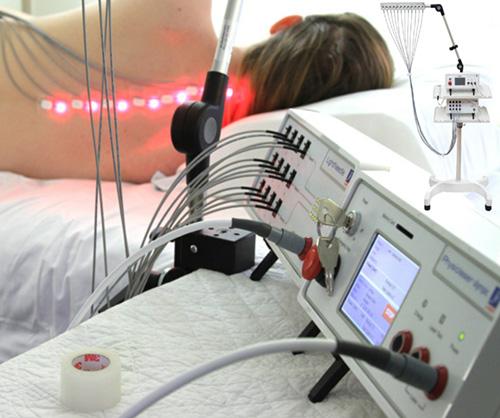
Laser acupuncture
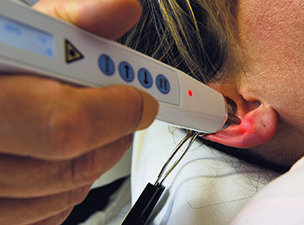
Laser acupuncture is used as a reflex and stimulation therapy, similar to traditional acupuncture. Therefore, a basic understanding of the different types of acupuncture is a prerequisite for laser acupuncture. The autonomic side effects are also similar to those of traditional acupuncture. Since laser acupuncture does not create a micro-wound like needles, but rather introduces micro-information into the biological system, the treatment interval can be somewhat shorter than in traditional acupuncture. Beside lasers like the LaserPen a kind of "laser needle", the LightNeedle can be used. The LightNeedle is a probe of the Physiolaser.
LightNeedle acupuncture
The original LaserPen
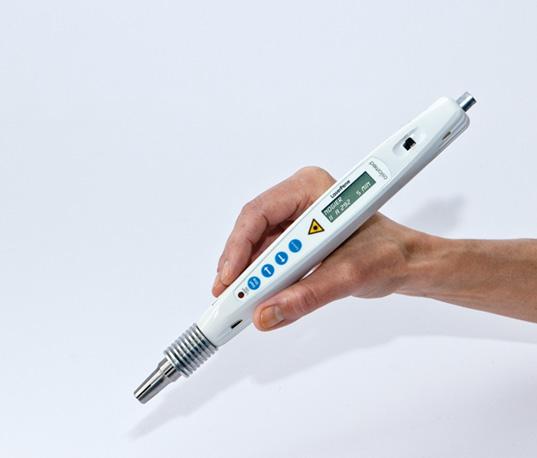
LaserPen acupuncture
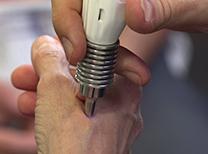
Laser acupuncture is used as a reflex and stimulation therapy and is similar in its approach to conventional acupuncture. It is assumed that a basic understanding of the various forms of acupuncture is a prerequisite for the application of laser acupuncture.
It has been observed that the vegetative side effects are consistent with those of conventional acupuncture. Unlike conventional acupuncture, which creates a micro-wound, laser acupuncture induces a micro-stimulation in the biological system. Due to this property, the interval between treatments can be shortened. It has been repeatedly observed that repeat sessions held at a 4- or 5-day interval make a significant contribution to treatment success.
In the field of laser ear acupuncture with the LaserPen, four to eight treatments are generally sufficient. In some cases, just one to three sessions may be enough. The actual duration of the treatment depends on the number of points or areas and ranges from 20 seconds. The duration of the experiment was five minutes, during which one point was treated. Cranial acupuncture can be cited as an example here. It may be beneficial to combine acupuncture with laser therapy.
Buy your laser for acupuncture here.
LightNeedle acupuncture
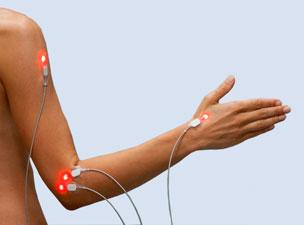
Laserpen meridian therapy
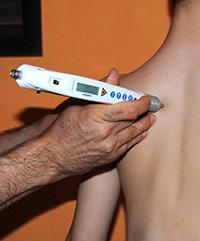
Ear acupuncture, Physiolaser
Oren Ziv - RAC pulse diagnosis
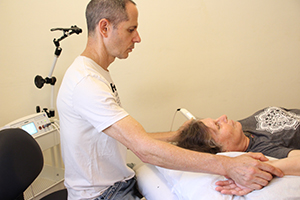
Online Laser course with Oren Ziv.
Oren has 27 years of experience in Japanese acupuncture and Master Dong, German auricular medicine, and laser acupuncture.
The course is designed to provide therapists with a comprehensive learning experience, covering the fundamental principles of laser therapy and progressing to advanced clinical protocols and treatment methods. These methods include bio-frequencies and RAC pulse diagnosis. The objective of the laser course is to facilitate practitioners' comprehension of the fundamentals, enable them to select appropriate parameters, and empower them to apply laser therapy with greater efficacy and confidence in their daily practice.
Phone: +351915698420 / EMail: vcoil@gmail.com / Website: www.oren-ziv.co.il